Collaborative experiment · Independent design extension · 2024
MoodLens
Posture, EEG & spatial feedback
A collaborative experiment in posture and EEG recording, developed into an independent exploration of generative feedback and spatial interaction.
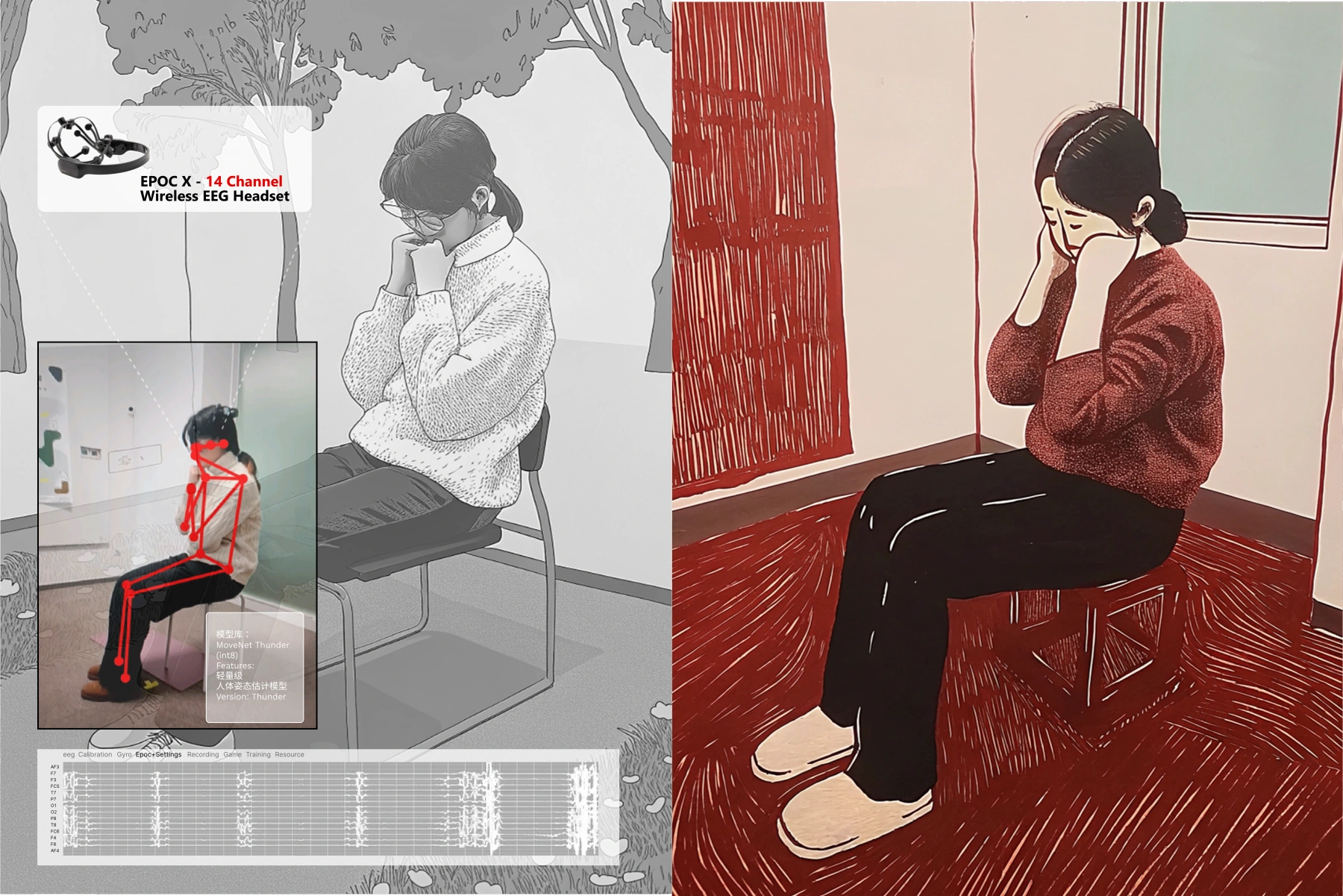
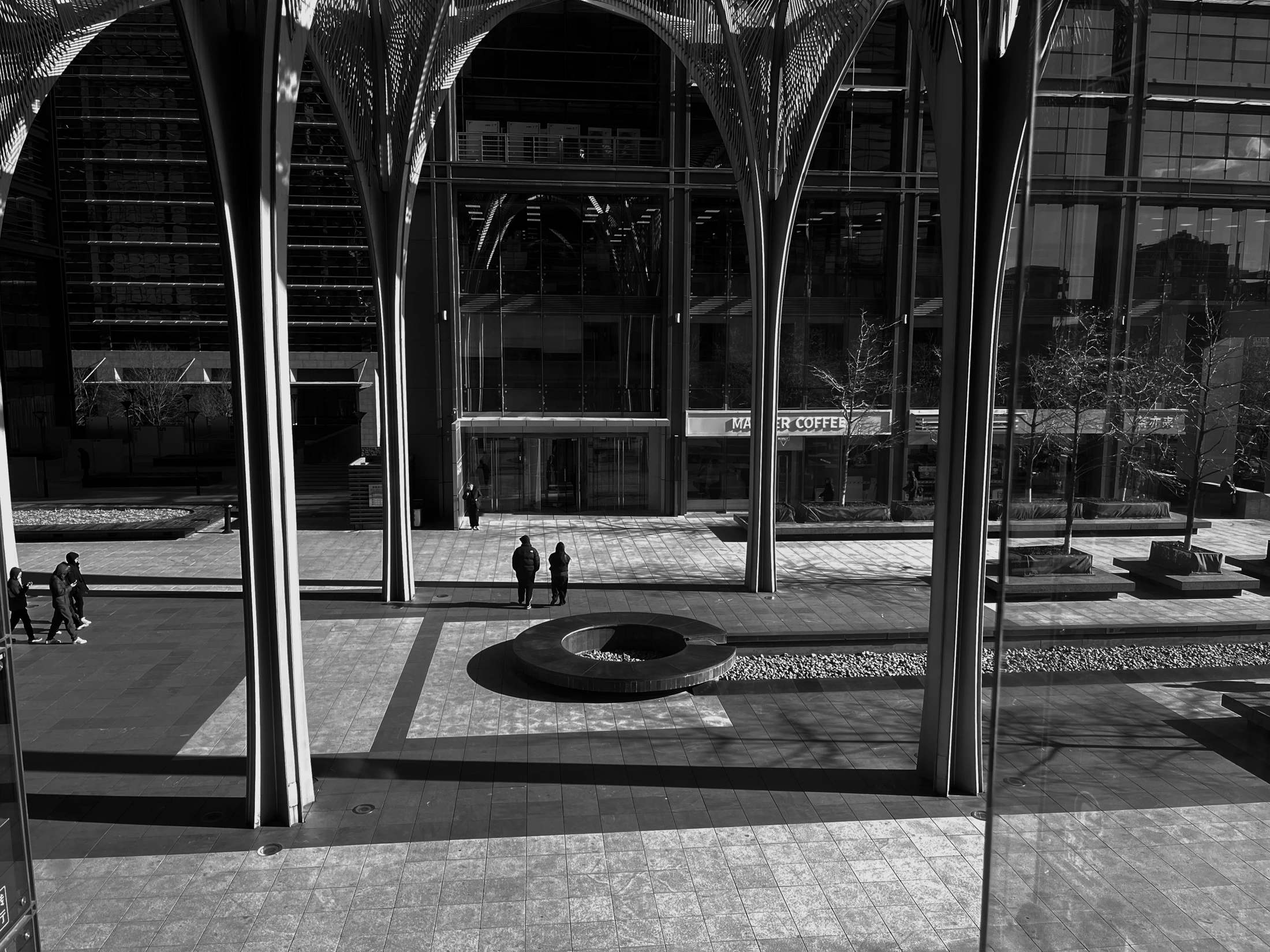
Original portrait cover
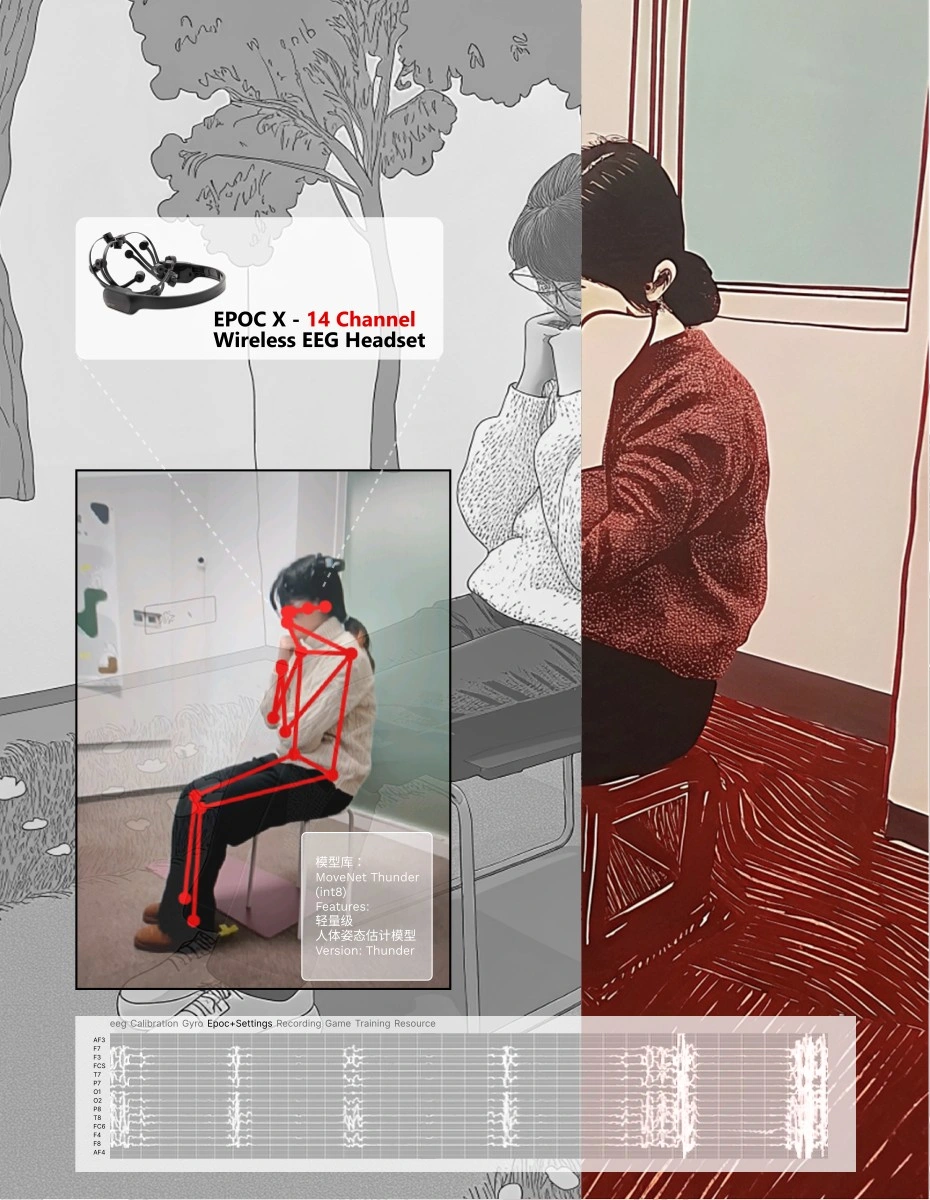
Body, emotion and everyday space
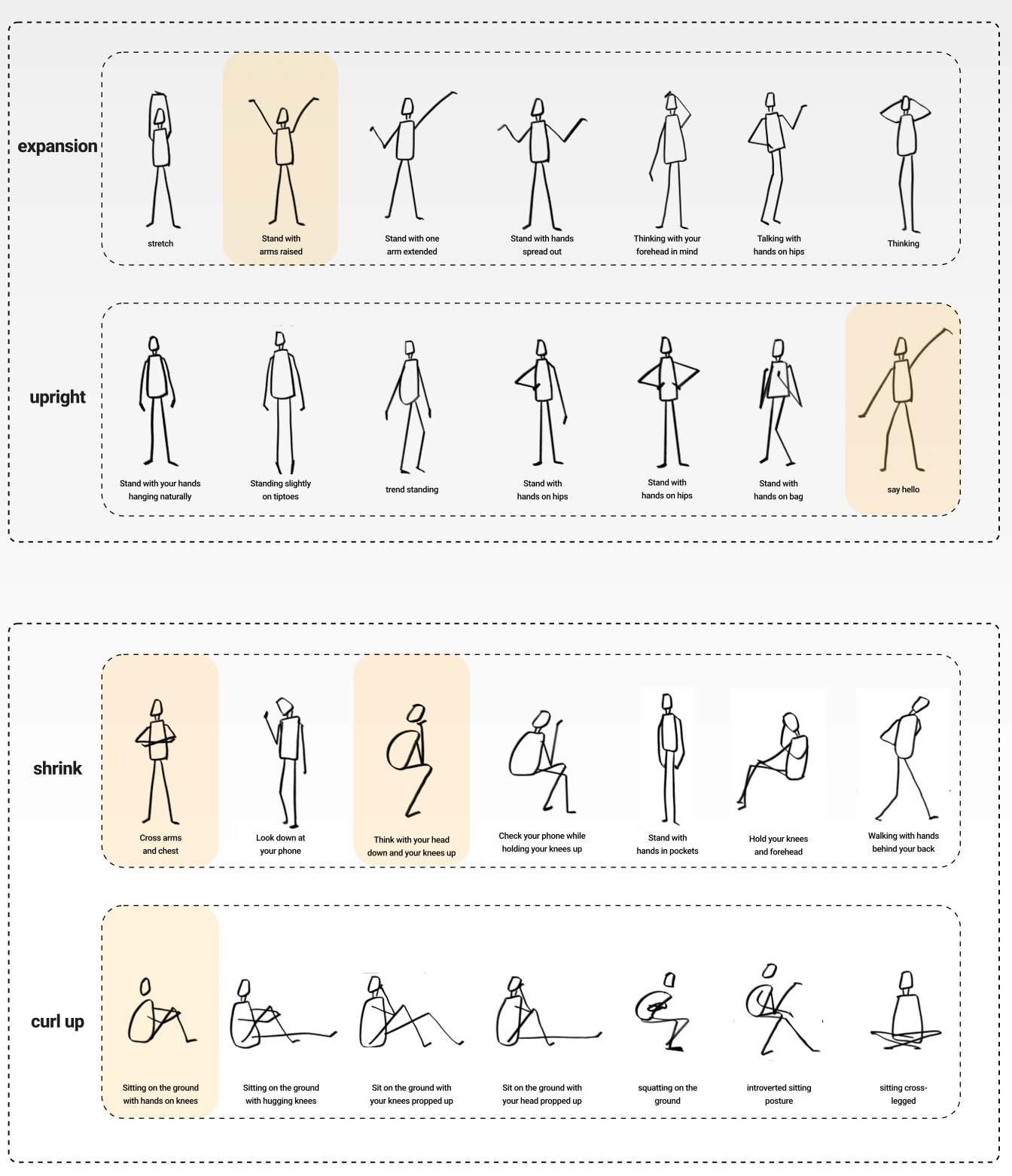
The project begins with bodily expression in everyday settings. Four posture categories organize this visual inquiry; they are a starting point for the study rather than fixed labels for a person’s emotional state.
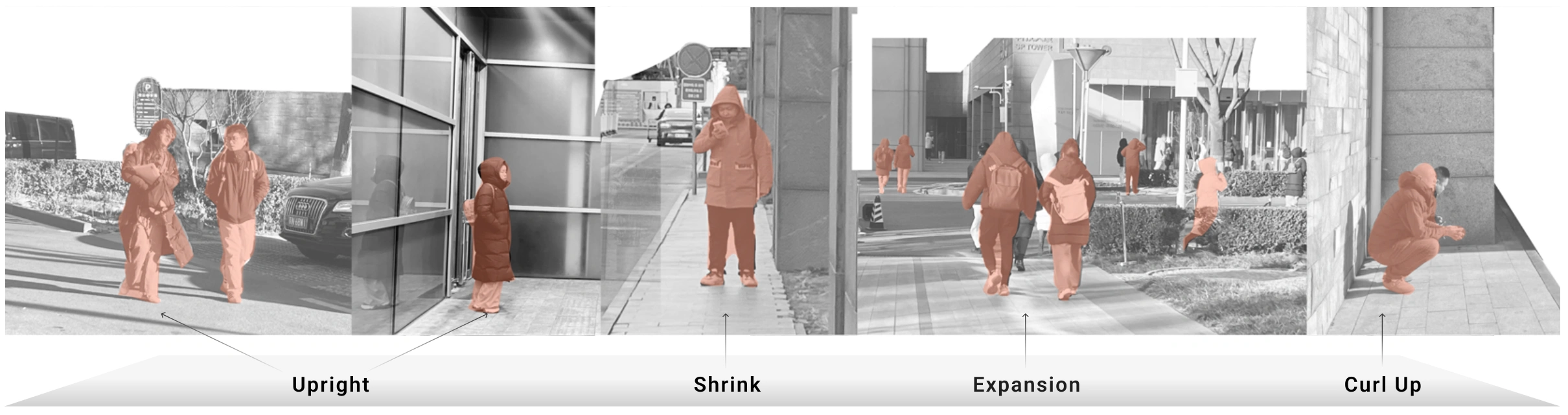
From observation to five target postures
Twenty-eight postures were organized into four categories. Preliminary survey work informed the selection of five target postures for the experiment.
- 28 postures
- 4 categories
- Preliminary surveys
- 5 target postures
The experiment
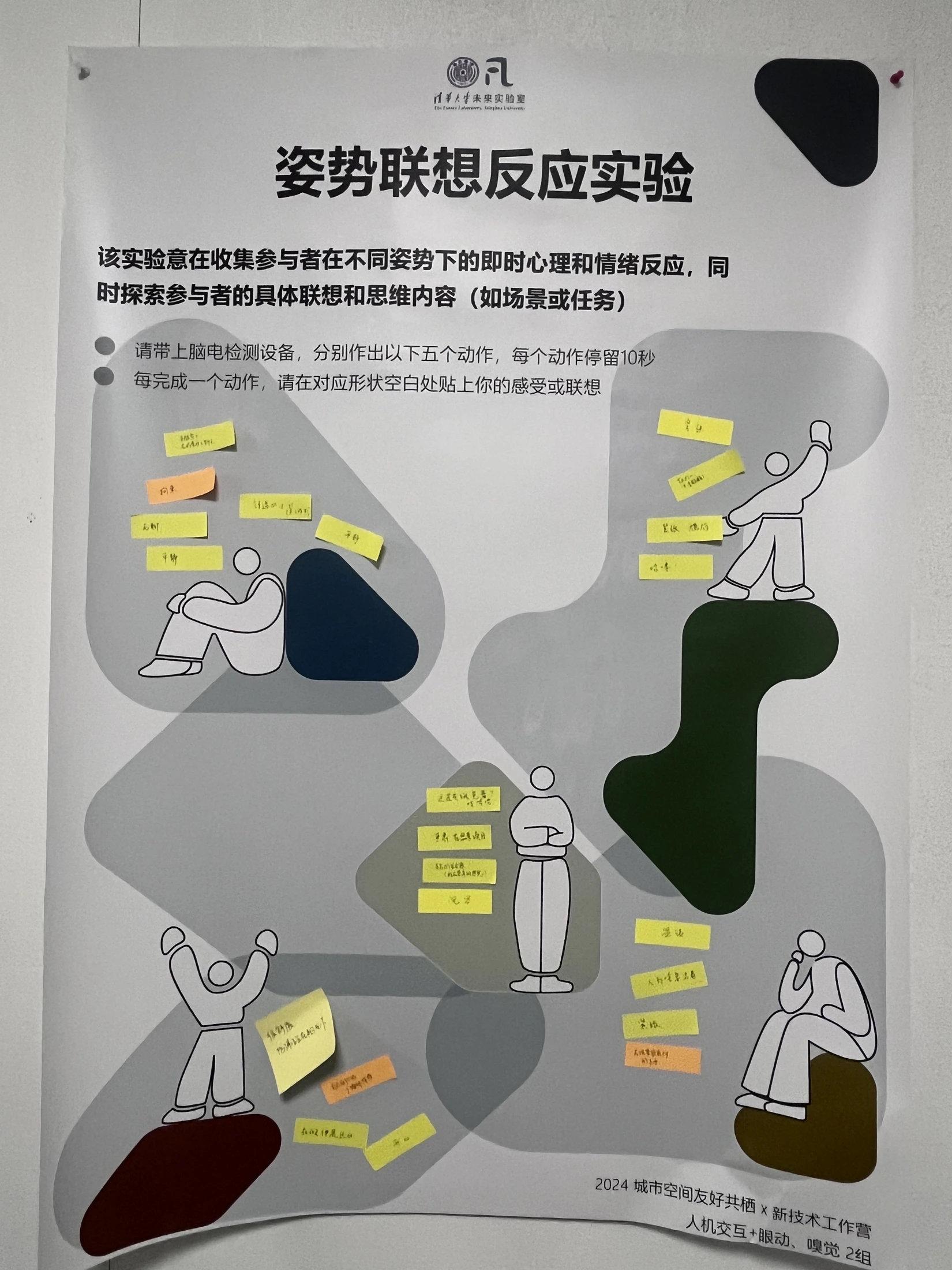
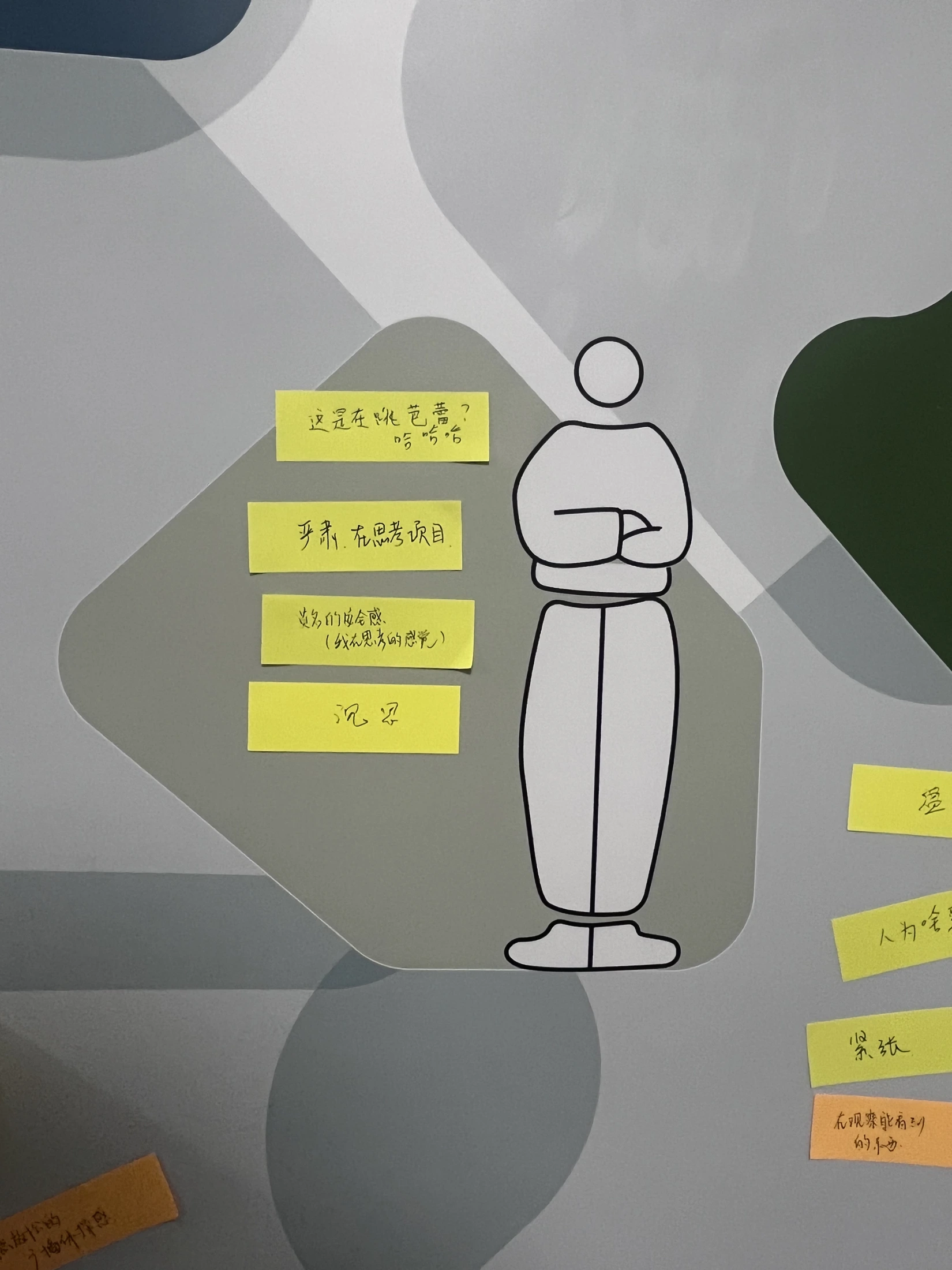
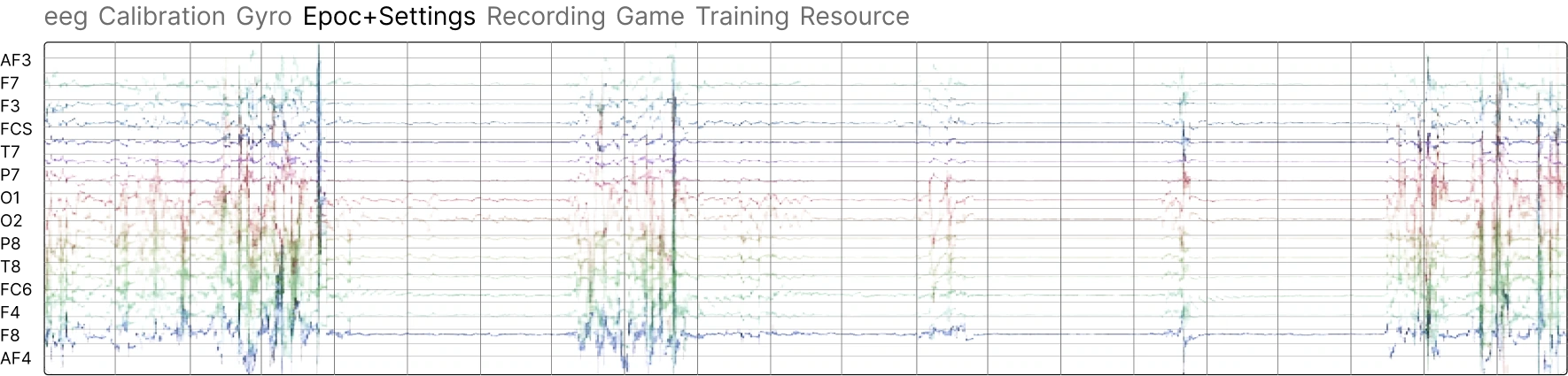
Participants performed the target postures while wearing an EPOC X EEG headset. Camera recordings, questionnaires and think-aloud accounts provided complementary records of the session.
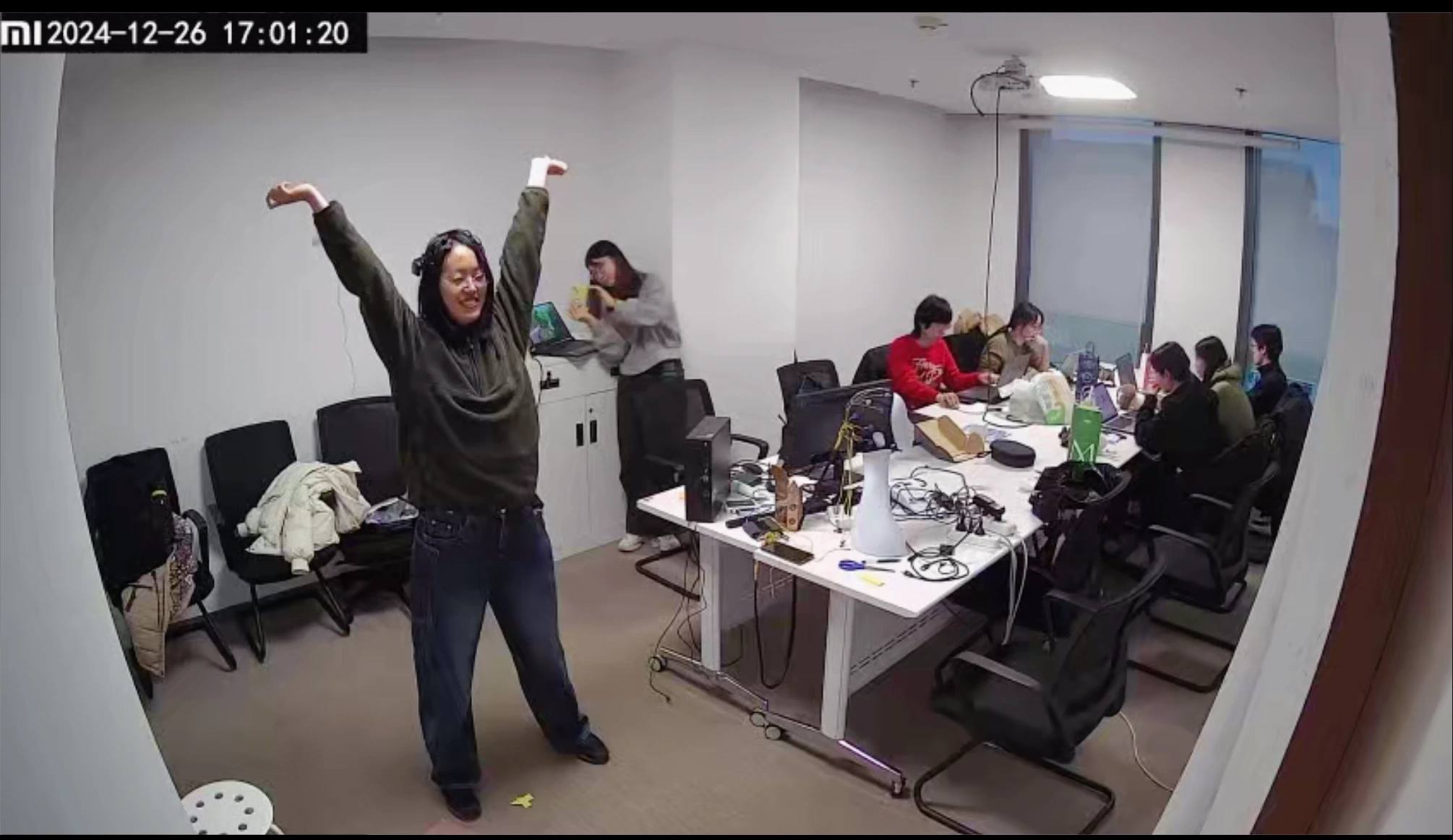
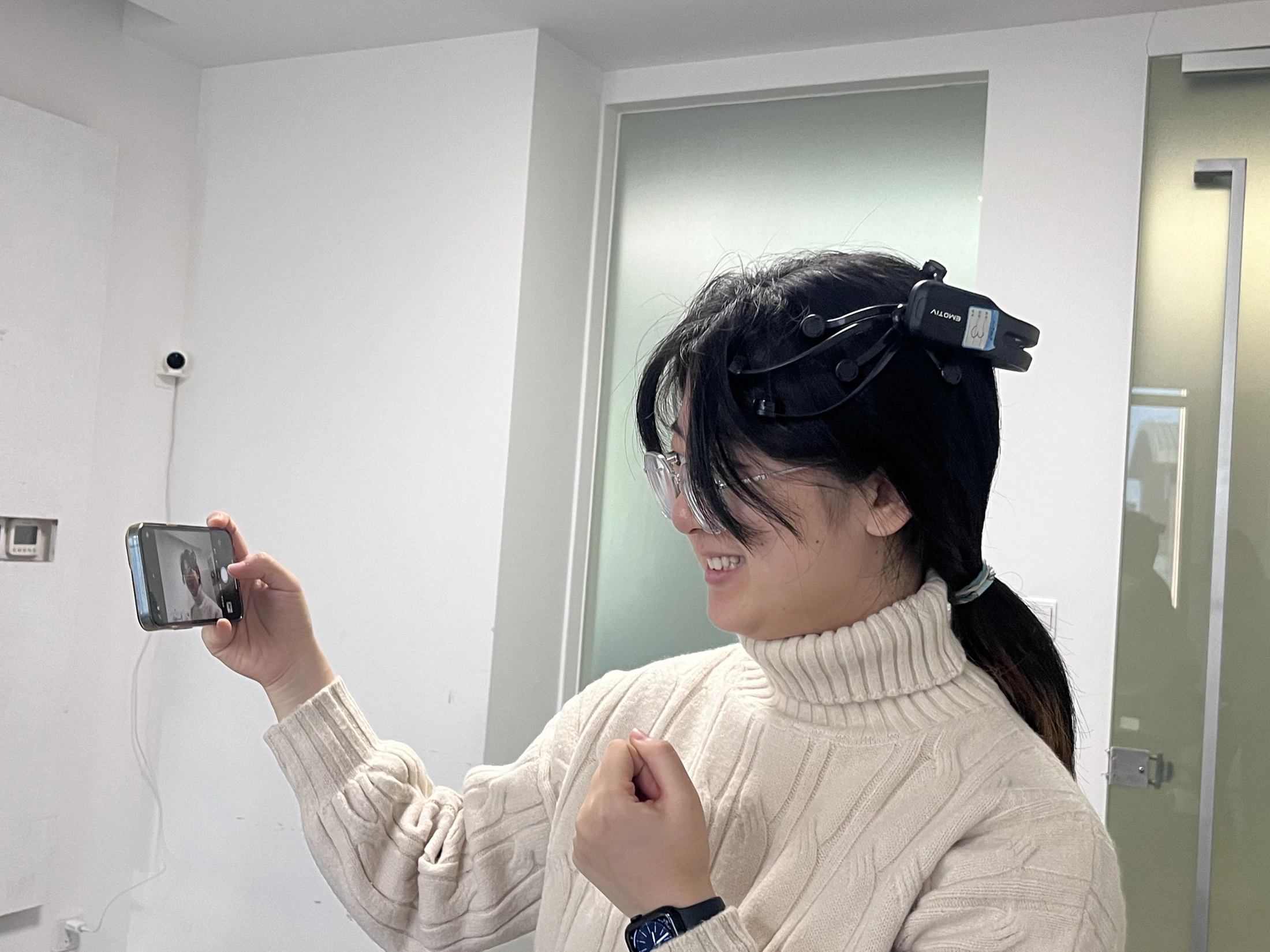
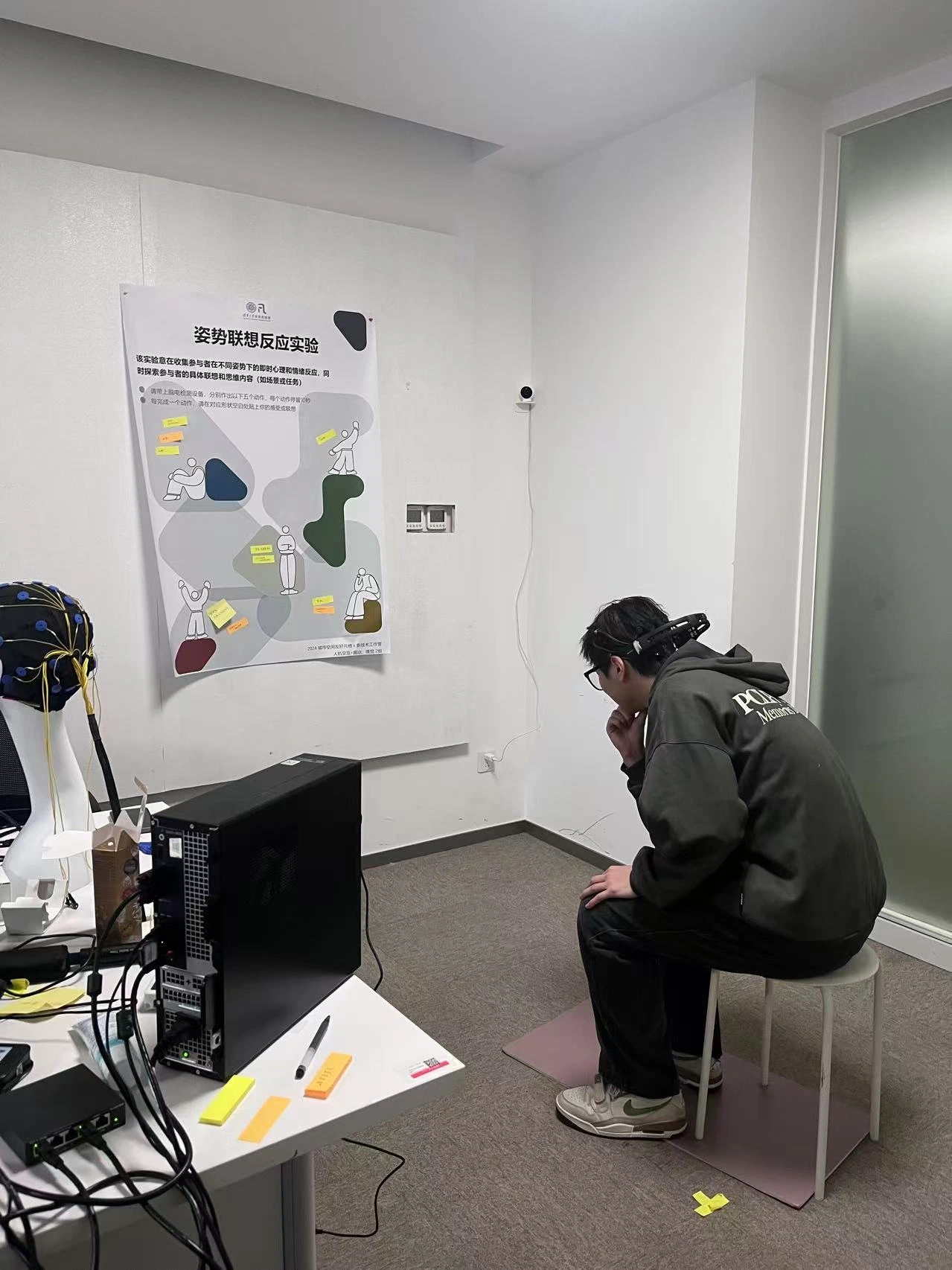
- Questionnaire
- Pose task + EEG recording
- Think-aloud account
- Aligned records
Pose recognition and data processing
MoveNet extracts 17 body keypoints. The implemented work includes classification of the five target postures, EEG preprocessing with bandpass filtering, ICA and normalization, and emotion classification. The images document different steps in that workflow.
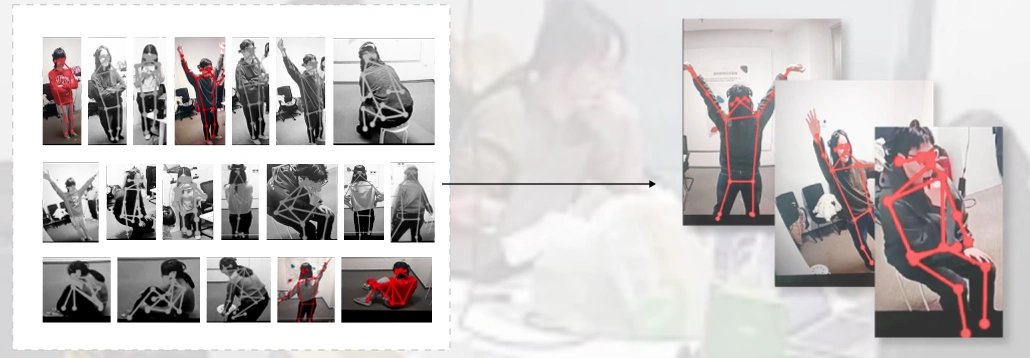
- Video → body keypoints
- EEG → preprocessing
- Alignment + labels
- Classification
Reading across participants
The study documents six participants. Keeping the records together makes variation across participants visible. Self-reported experience, EEG-derived measures and model outputs should be interpreted as different forms of evidence.
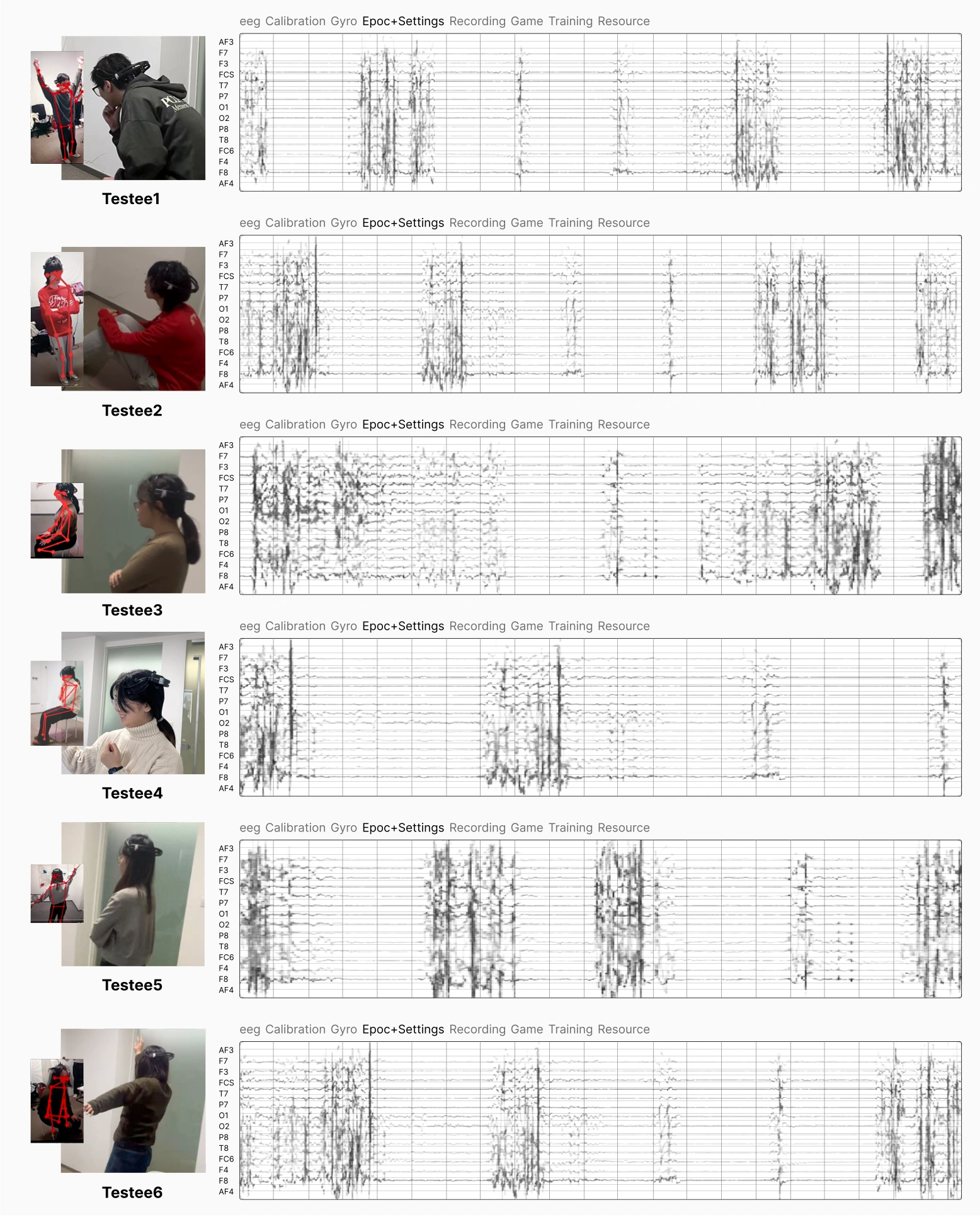
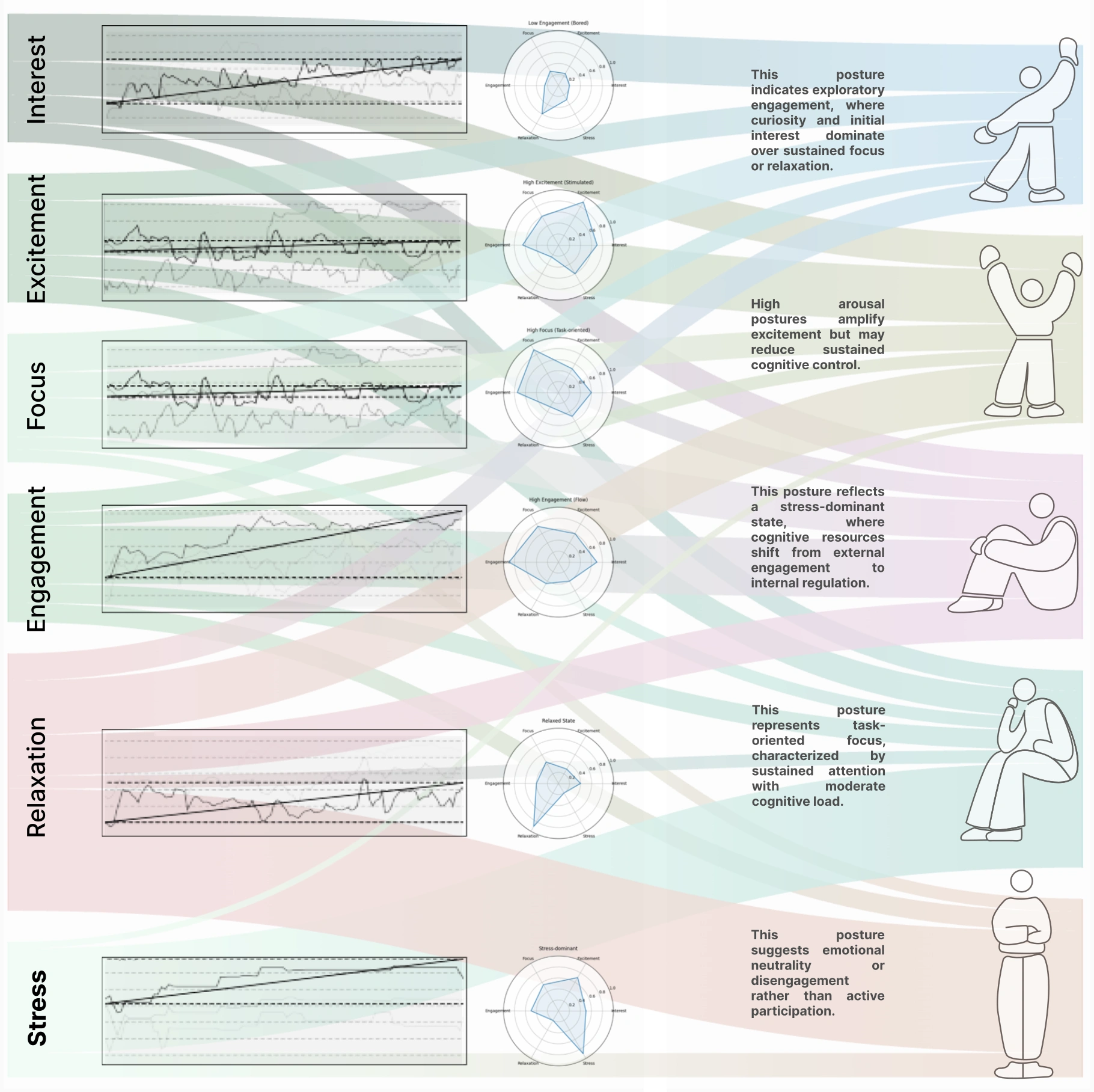
The experiment produced working processing and classification results. Broader generalization and therapeutic benefit remain separate questions.
From signals to visual feedback
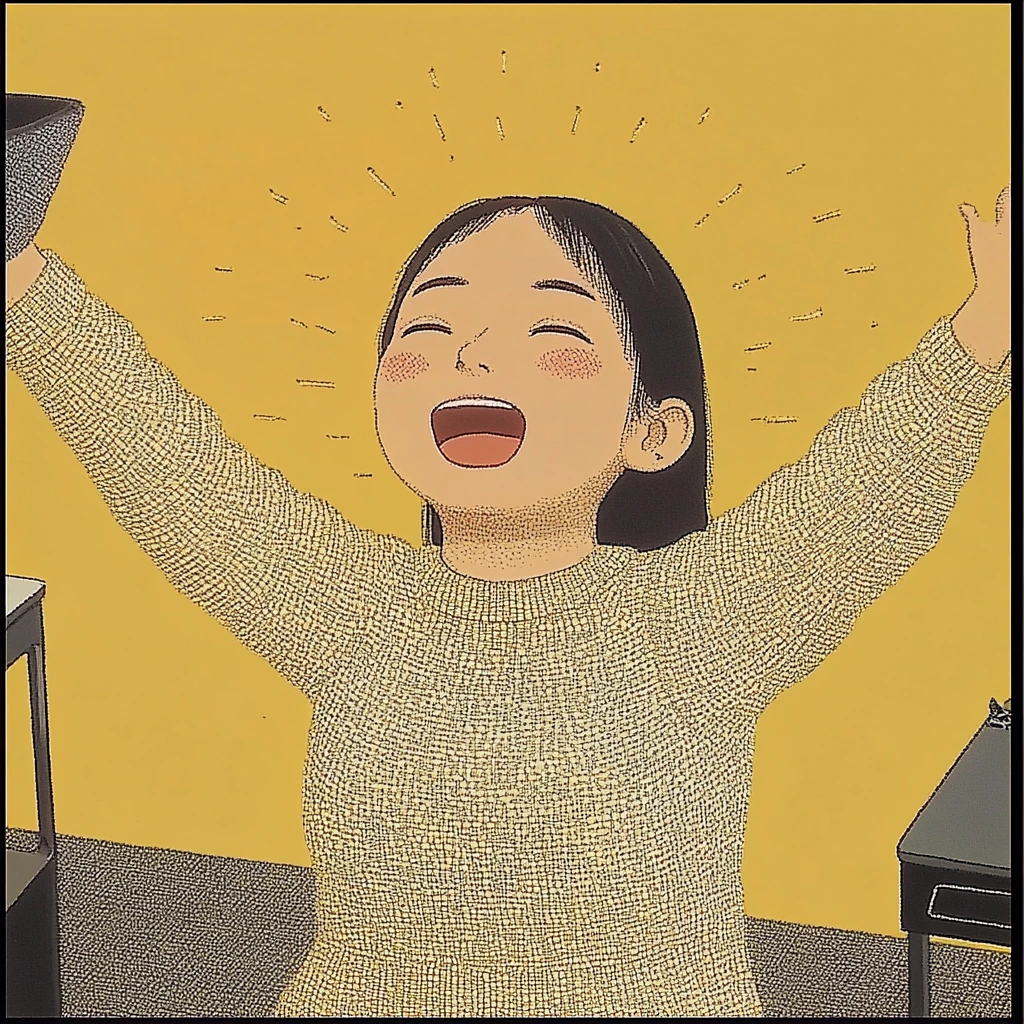
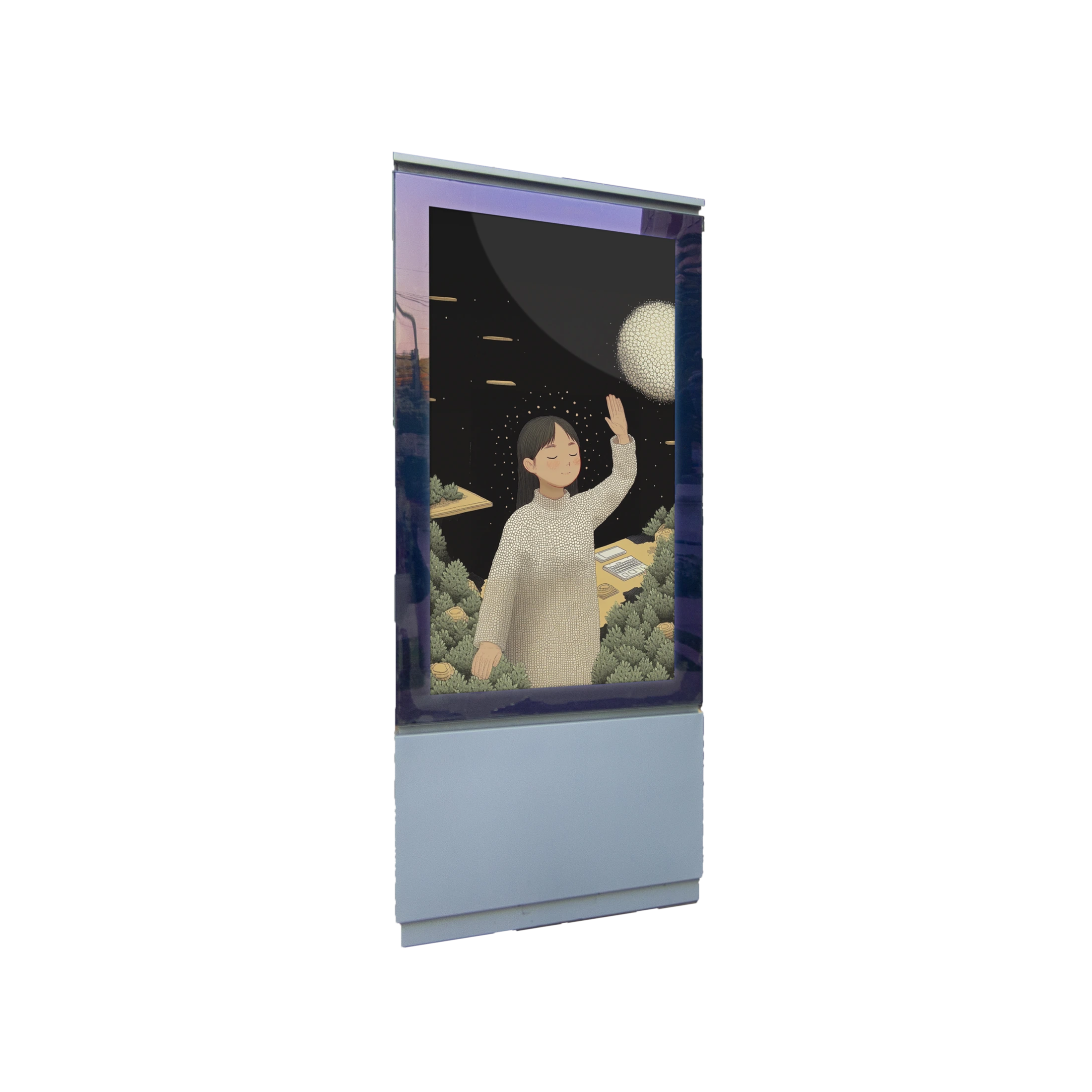
Posture and emotion-related descriptions inform prompts for Stable Diffusion. These examples show the visual feedback explored in the project; the collection explores different visual interpretations of bodily expression.


A spatial interaction proposal
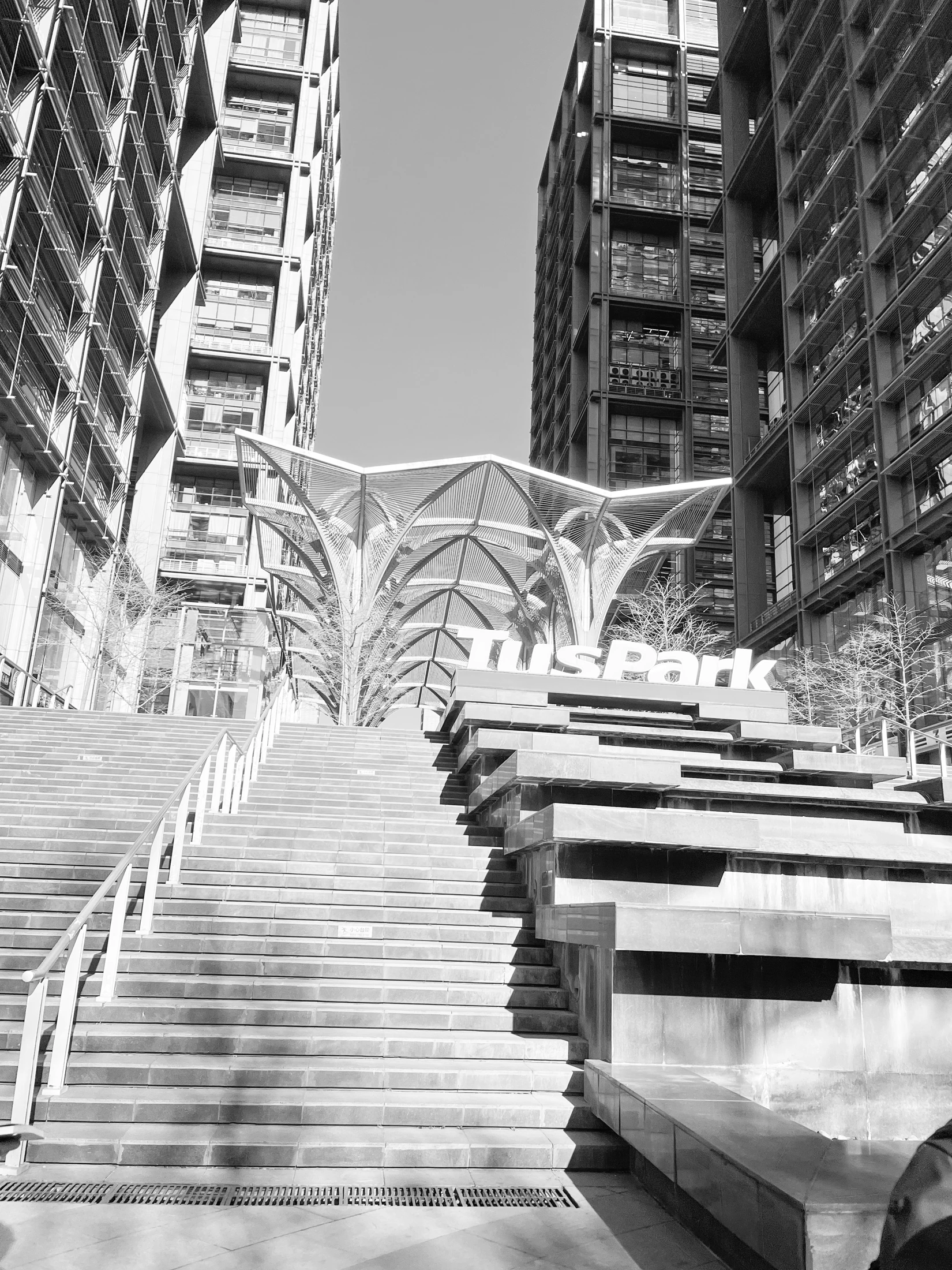
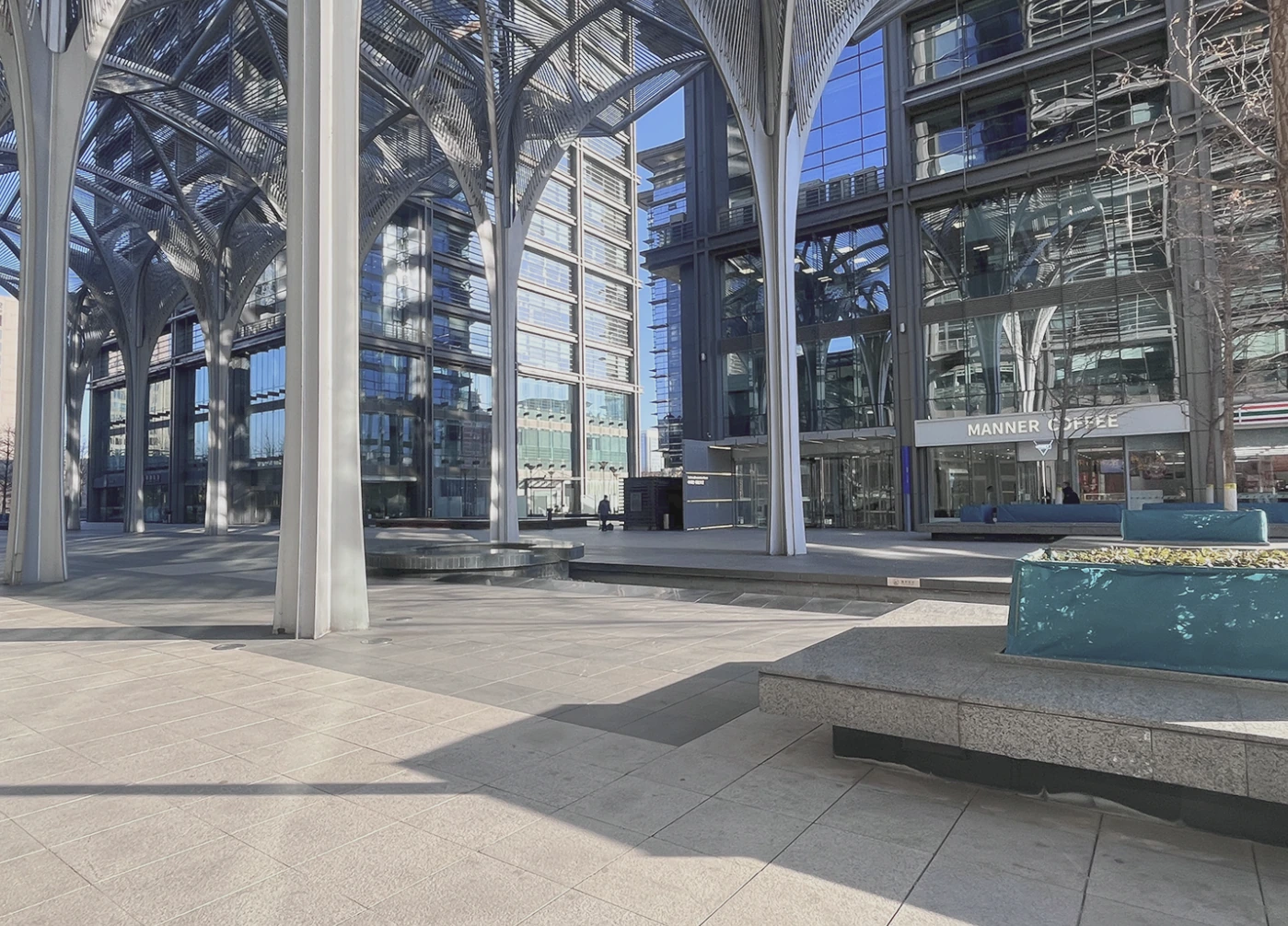
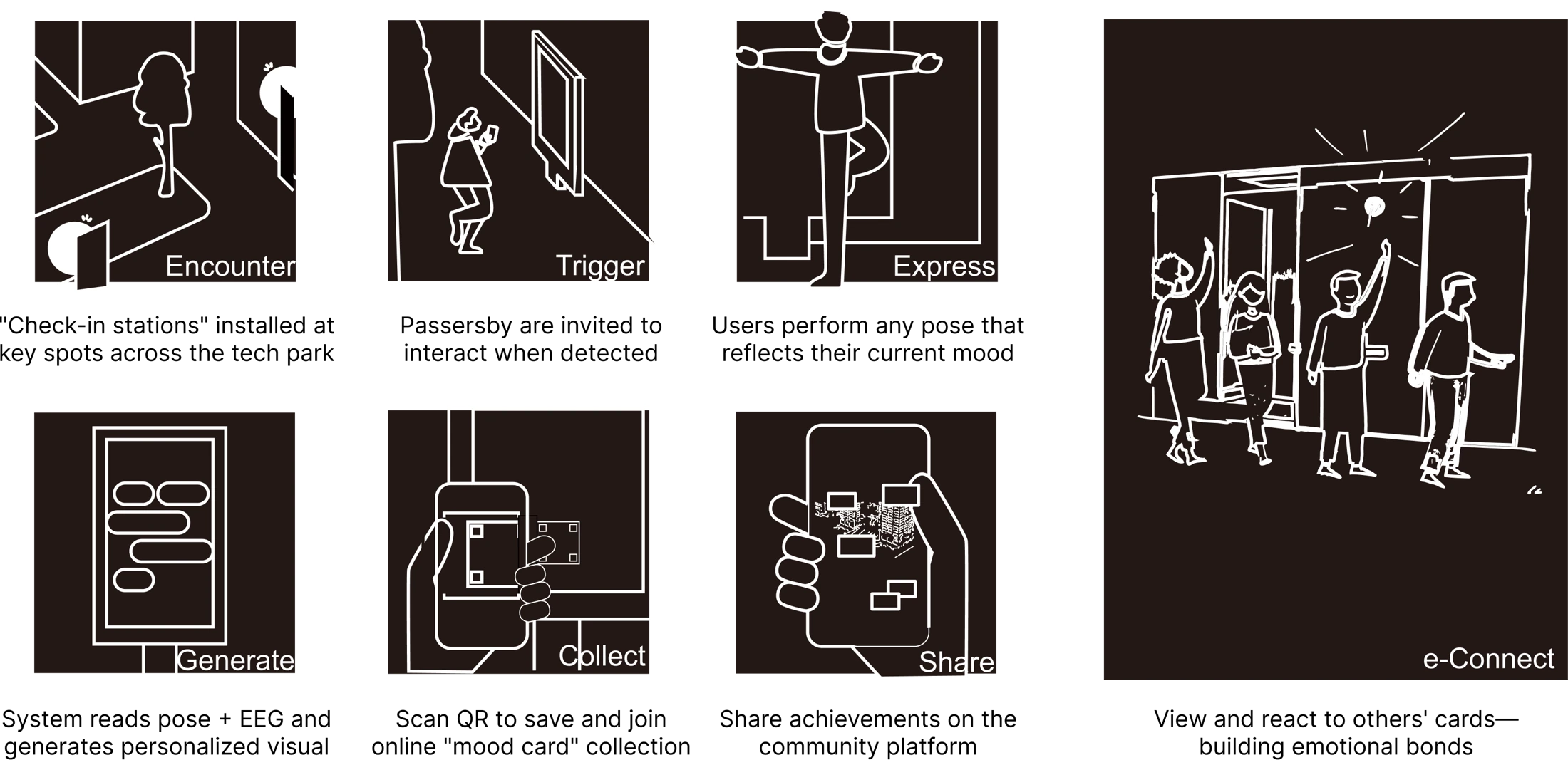
The subsequent design places the feedback within a technology-park installation. The sequence connects encountering the installation, bodily expression, generated feedback and sharing.
Sharing and a collective spatial record
The later interface concept extends the experience into an emotional map and shared visual records. This is a design extension rather than a deployed workplace service.
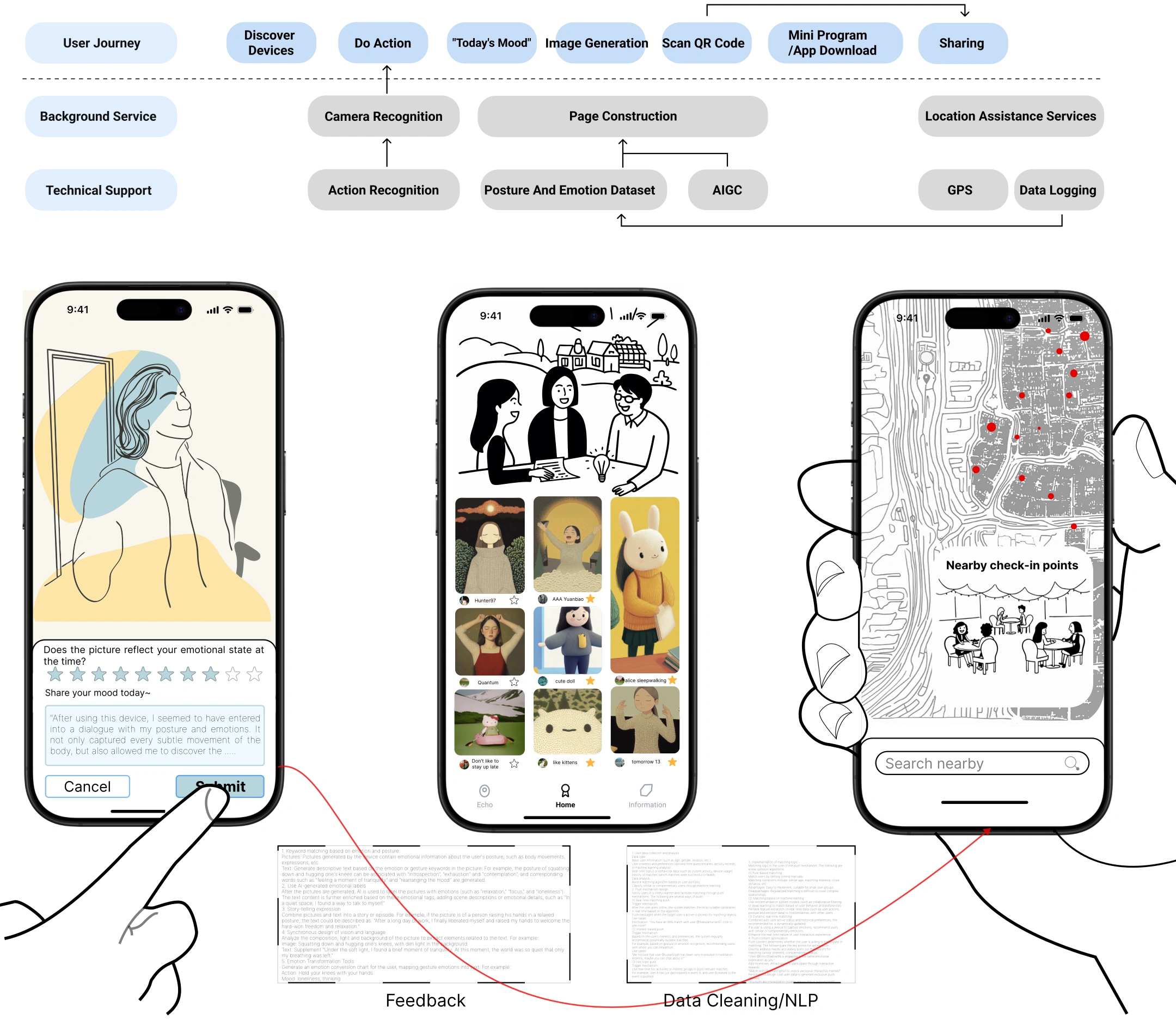
My contributions include pose-recognition development, EEG processing, user-study design, AIGC integration and the later interaction and interface design.